
How Do Porta Potties Work?
Under the seat sits the holding tank, sized at 60 to 70 gallons on a standard porta potty rental. Waste drops straight in. A charge of blue sanitizing chemical breaks down solids and knocks back odor between services. Above the tank, a roof vent stack lets gas escape outside instead of building up inside the unit. There's no water line and no sewer hookup, which is why placement is so flexible for a construction site services job or a weekend party. The whole unit is about 44 by 48 inches on the ground and stands roughly 92 inches tall, small enough to tuck against a fence line but tall enough that a grown adult clears the roof vent with room to spare. Service techs pump the tank, hose down the interior, and dose fresh chemical during each visit. ANSI/PSAI Z4.3, the industry sanitation standard, sets a baseline of one service visit per week for up to 10 users across a 40 hour week, though busy job sites and multi-day events usually need more frequent stops. If you're mapping out counts for a crew, the how many porta potties do I need guide walks through the math.
How Do Flushable Porta Potties Work?
A flushable, or deluxe, unit adds a foot pump or hand pump that pushes a small rinse of fresh water into the bowl before waste drops into the tank below. It feels closer to a real bathroom. The deluxe flushable porta potty still uses a sealed holding tank underneath, just like the standard model, so nothing connects to a sewer line. Some deluxe units also add a hand sanitizer dispenser or a small sink built into the wall. These get requested most for weddings and office events where guests notice details. Pricing runs higher than a standard unit because of the added plumbing hardware and interior finish; check porta potty rental cost for how that compares across unit types before you book for a Pleasanton event.
How Does a Portable Sink Work?
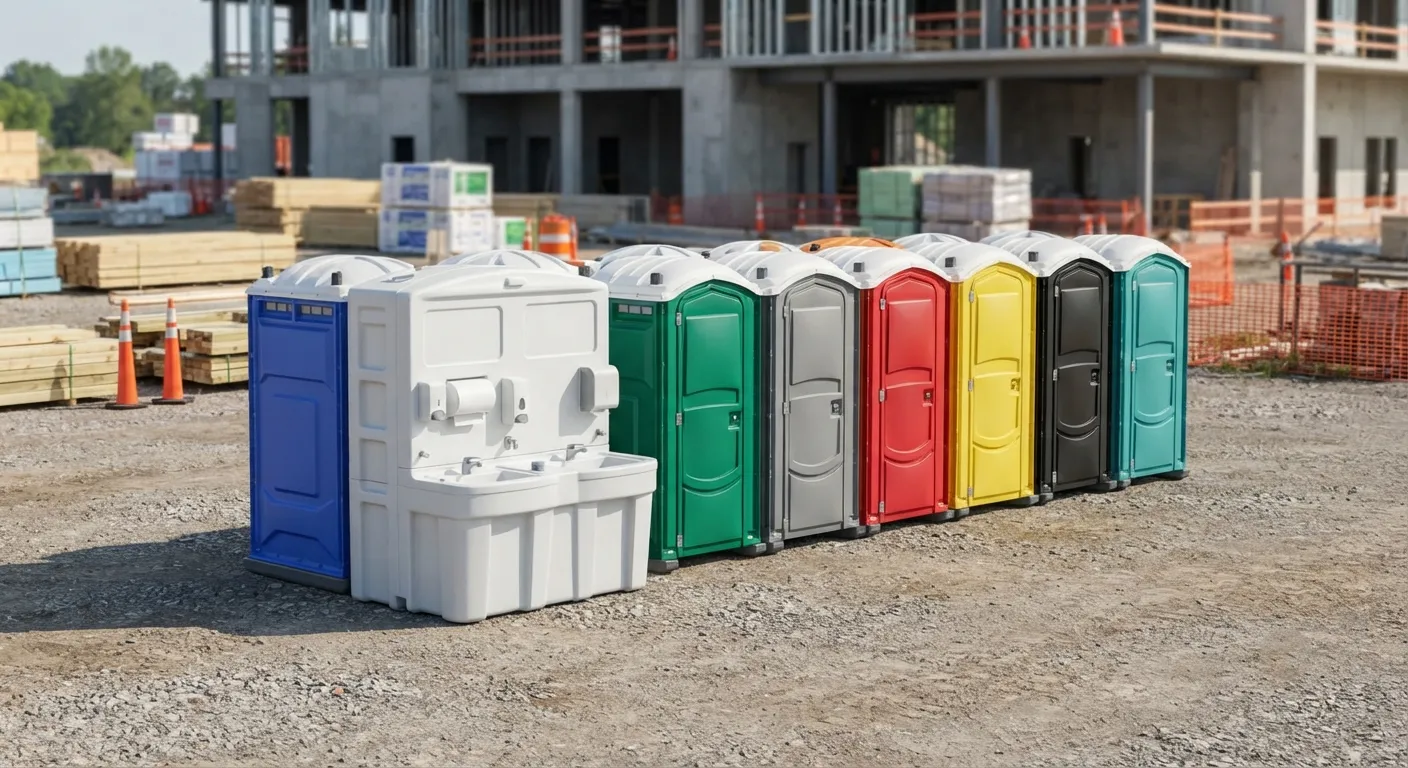
A portable sink runs on a self-contained fresh water tank, usually paired with a foot pump or a battery-powered pump, and a separate gray water tank underneath to catch runoff. No hose bib needed. Soap and paper towels sit in built-in dispensers. This matters for job sites: 29 CFR 1910.141(d)(2) requires washing facilities stocked with soap and towels or a hand-drying device, and hand sanitizer alone does not satisfy that. A handwashing station rental or portable sink rental covers that requirement without tying into plumbing. For crews applying paints, coatings, herbicides or insecticides, OSHA 1926.51(f)(1) specifically requires washing facilities for that contaminant exposure, which is a narrower rule than general sanitation. If you're unsure which standard applies to your crew, the handwashing requirements page breaks down the difference.
Do Camping Porta Potties Work the Same Way?
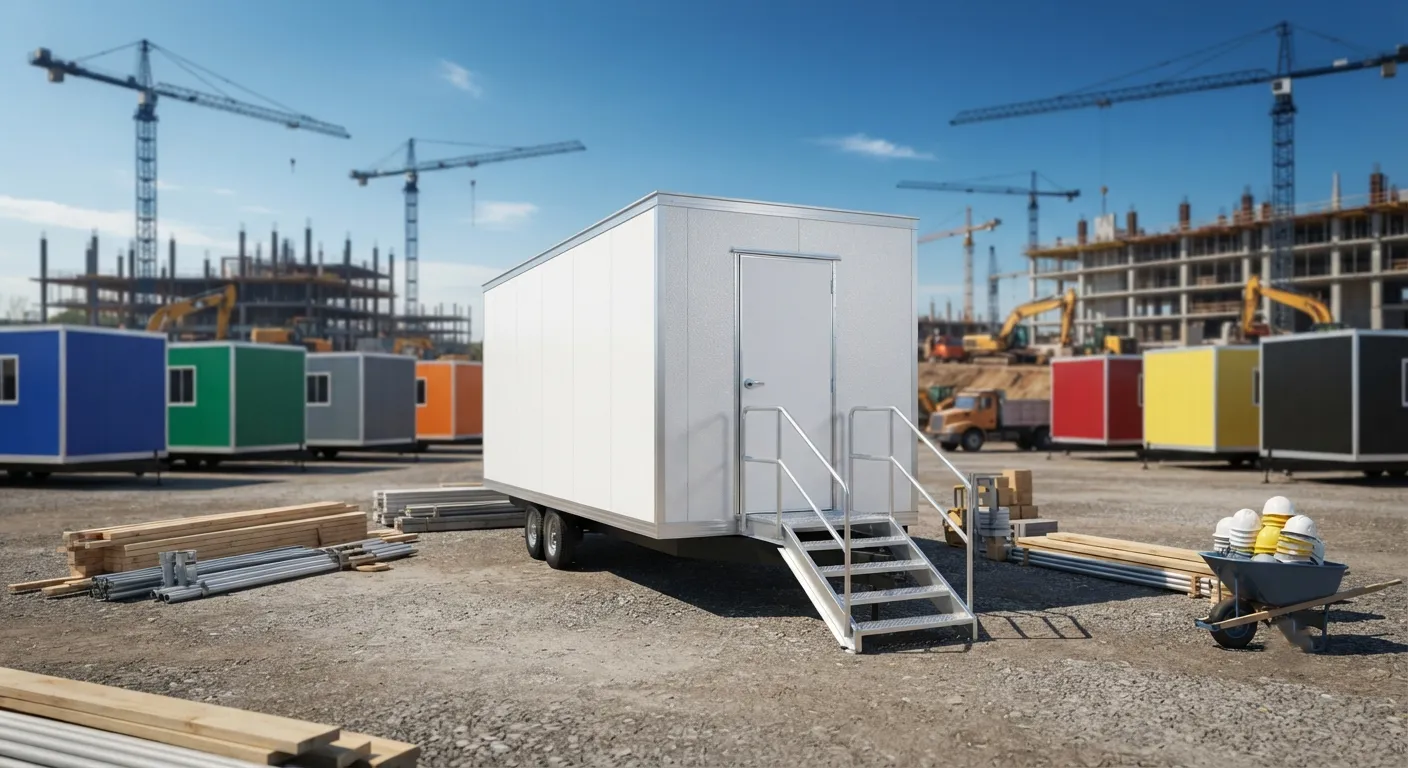
Camping units work on the same sealed-tank principle but scaled down, often with a smaller internal tank instead of a full-size holding tank, meant for a handful of uses before dumping. Rental units for a campsite or trailhead event still use the 60 to 70 gallon tank standard, since they're serviced on a route rather than carried out by hand. For groups camping near Pleasanton, a camping porta potty rental gets delivered and picked up like any standard unit, no different in mechanics from what a construction worker running to a porta potty on a job site would use. The tank, chemical and vent system stay the same whether it's parked at a festival, a farm, or a weekend campsite. Distance matters for delivery routing: Pleasanton sits about 5.2 miles south of Dublin and 7.3 miles north of Sunol, both inside normal delivery range for scheduled service. If your event needs a cluster of units instead of just one, event restroom rental covers layout and count.
| Unit type | Day | Week | Month |
|---|---|---|---|
| Standard | $100 - $350 | $130 - $500 | $125 - $325 |
| Deluxe flushable | $85 - $1200 | $150 - $290 | -- |
| ADA accessible | $200 - $400 | $240 - $400 | -- |
For job sites, OSHA 1926.51(c) sets the ratio: one toilet for 20 workers or fewer, scaling up as crew size grows. That rule, plus ADA Standards 213.2 requiring at least one accessible unit in any cluster, shapes how many units and what mix a contractor orders. See the ADA accessible porta potty page for accessible unit specs, or OSHA portable toilet requirements for the full breakdown by crew size.
How often do porta potties get serviced?
Standard service follows a weekly rhythm under the ANSI/PSAI Z4.3 baseline, one visit per week for up to 10 users over a 40 hour week. High-traffic construction sites or multi-day events often need two or three visits weekly. See how often are porta potties cleaned for scheduling by use case.
What chemical do porta potties use?
Units use a blue deodorizing and sanitizing chemical dropped into the tank to break down waste and control odor between services. It's not the same as septic tank cleaning chemicals used in a home system, which target a much larger 1,000-plus gallon tank pumped every 3 to 5 years.
Do porta potties smell bad?
Not when serviced on schedule. The vent stack pulls gas up and out, and the chemical charge keeps odor down between visits. Heat and missed service intervals are the usual cause of smell complaints. Full details sit on do porta potties smell.
Can I get a porta potty delivered same day in Pleasanton?
Often yes, depending on unit availability and route timing that day. Emergency requests get handled through emergency porta potty rental, which prioritizes fast dispatch over standard scheduling.
How much does a porta potty rental cost per day?
Day rates for a standard unit run $100 to $350 depending on unit type and rental length. Multi-day and weekly rentals cost less per day than single-day bookings. Full pricing breakdown lives at porta potty rental per day.
Next step
Get a delivery date
Tell us the address, the dates and the headcount. We size the order and confirm the route.